Scientists Reconstruct the Face of a Botai Man Who Lived 5,400 Years Ago
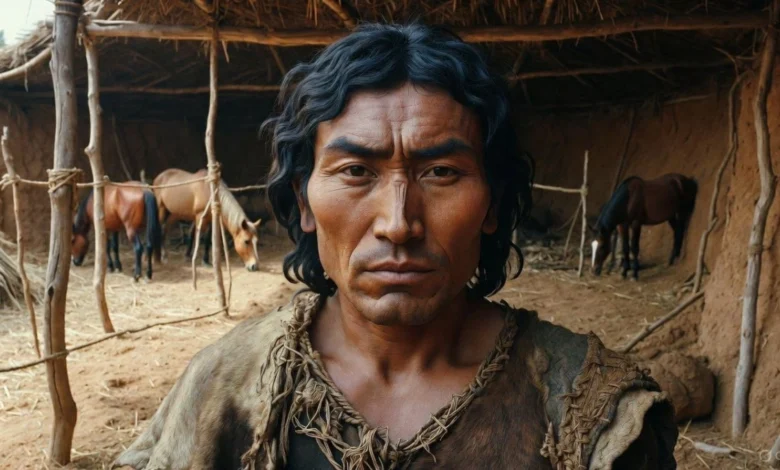
Researchers have recreated the facial appearance of a man from the Botai culture — an Eneolithic community known as one of the world’s earliest domesticators of horses. The reconstruction, reported by El.kz and cited by TuraNews.kz, offers a rare glimpse into the genetic and anthropological roots of Central Asia.
The analysis revealed a strikingly mixed appearance. The man showed predominantly Caucasoid traits, yet also carried clear East Eurasian (Mongoloid) features. His dark hair, almond-shaped eyes and Asian-leaning facial contours contrasted with the cranial shape and wide cheekbones typical of Caucasoid populations. Anthropologists note that this combination represents an early stage in the emergence of the Central Asian or Turan phenotype — now characteristic of Kazakhs, Kyrgyz, Karakalpaks and several other regional groups.
Genetic data indicate that approximately 80% of the Botai population’s ancestry came from ancient Siberian groups, with the remainder linked to East Eurasian and minor Western European hunter-gatherer lineages.
At the same time, far to the west, the Yamnaya culture dominated the Black Sea–Caspian steppes. These populations, with classic Caucasoid features, became the ancestors of Indo-European groups in Europe and South Asia. In contrast, the Tashtyk culture emerging in the Minusinsk Basin centuries later represented a distinctly Mongoloid population.
The Botai community thus represents a transitional anthropological stage. Around 5–6 millennia ago, the Central Asian steppes witnessed the formation of the mixed phenotype that would later define many Turkic peoples.
The Botai are also recognized as the world’s earliest known horse herders. Their settlements were semi-sedentary, and excavations at the site of Botai alone uncovered more than 160 semi-dugout dwellings. Diets relied heavily on horse meat and mare’s milk, while enclosures and large accumulations of horse manure provide clear evidence of horse domestication.